Love Thy Neighbor

Last year, our development decided to change the way our mail gets delivered. As a result, we now have cluster boxes. This presents a challenge anytime a substitute delivery person is called in–many of us have addresses that are identical except for the addition or subtraction of a letter. Misdelivered mail appears in our box routinely now, almost always for our neighbors Sara and Phil who share the same numerical prefix as Kris and me.

A few months ago we mistakenly received a box of Phil’s new checks, and I dutifully walked the package next door that very day. On other occasions, Sara or Phil have brought misplaced credit cards offers and bank statements to our door. This is the Christian thing to do, a fact that while not relevant to Kris and me is important to Sara and Phil, fundamentalist Christians who have chosen to homeschool their three sons in order to insulate them from the perceived vagaries of a secular education.

When we first found out we were living alongside right-wing fundies, Kris and I were a wee bit nervous. We can only imagine–and often have, to entertain ourselves–what Phil and Sara must have thought half a dozen years ago when a couple of lesbians and their dogs moved into the empty house next door. But they have been nothing but kind to us from the start, and their youngest son Aaron, who was only three when we moved in, is an enthusiastic helper with many of our outdoor projects. Sure, he dresses in camouflage head-to-toe pretty much 24/7 and, with the help of an older brother, has built trenches in the back yard to facilitate more realistic reenactments of key World War I battles. But despite the Jesus Camp images that occasionally flash before my eyes when I see the miniature Rambo next door lobbing pine cone grenades at invisible enemies, I generally believe that Kris and I have a good relationship with Phil and Sara and their boys.

Still, our friends and family members know that we’re occasionally uneasy about the veracity of our neighbors’ apparent good will, given the cultural divide that exists between the majority of gay folks and Christian fundamentalists. Those who know our situation were universally surprised to learn that when a storm last Thanksgiving kept Kris and me snowbound at home, we accepted Phil’s invitation to cross the yard (careful to avoid any yawning trenches) and broke bread with our right-wing fundie neighbors.

Admittedly, there were a few iffy moments over dinner, like when we informed Sara that Kris was five months pregnant with our future daughter, or when Phil asked to try my gluten-free, vegan stuffing. But overall, we had a lovely Thanksgiving dinner with the welcoming family we know best out of anyone in our neighborhood.

A few weeks ago, the mail delivery went awry again. I was just back from the cluster boxes going through a stack of mail we hadn’t bothered to pick up for days when I noticed the return address on the envelope I’d opened: Focus on the Family. Or, Focus Hatred on Gay and Lesbian Families, as I like to call them. This group is a right-wing fundamentalist organization that opposes gay civil marriage and insists (despite the voluminous research that proves otherwise) that children raised by gay and lesbian parents experience irreparable harm. Their hateful messages are delivered, as many such messages are these days, in the guise of Christian love and concern for “the family,” a definition that most certainly does not include Kris, me, and our daughter. 

Why were they writing us, I wondered in a moment of knee-jerk paranoia as I held up the envelope for closer inspection. Had they somehow found out about our daughter’s birth and were targeting us personally? Then I noticed the address label: Phil and Sara, our next door neighbors. Of course. The envelope hadn’t been intended for our family at all. I set it down on the table and wiped my hands on my jeans, as if I could rub away the slightly sick feeling that came with the realization that the neighbors we chatted with on a daily basis, the people we’d shared Thanksgiving Dinner with last year, were somehow connected to an organization actively working to undermine our rights to civil liberty and the pursuit of our own version of happiness.

Here arose a quandary. I had already opened the envelope and begun to pull out the letter enclosed therein. Should I slide it back in and walk it next door unread? Was it illegal to read a letter that had been delivered to you and that you had already opened by mistake? And how could I as a member of the organization’s target group refrain from destroying the piece of hate propaganda in my hands?

The letter was already open, so I have to admit that I skimmed it quickly and discovered that it was the cover page for a newsletter sent out to monthly donors to Focus on the Family. Then I slipped it back in the envelope and set it aside to deal with later.

Hypothetically, I may have carried the letter into my office and left it in the pile of non-emergency mail to be gone through at a future unspecified date.

Or I may have walked it next door that same day. I might have knocked on Sara and Phil’s door and handed the envelope over with a friendly smile: “This appeared in our mailbox today, and I thought I should bring it by.”

Or I might have left it on their front stoop with a post-it that read, “Oops–got this by mistake.  🙂  Kate, Kris, and Alex.”

Or the note might have read, “Found this in our mailbox today. Realized it wasn’t meant for our family. – Your neighbors.”

What isn’t hypothetical is the feeling of betrayal that washed over me, the inescapable sense that Sara and Phil’s friendliness over the years might really have been masking their horror at having to live next door to a genuine–gasp–lesbian family. They know nothing of our marriage in Massachusetts, and they probably never will because our relationship, in their eyes, is invalid, unequal, a violation of God’s law. Love the sinner, not the sin, and all that hypocritical, judgmental bunk.

Amy Ray of Indigo Girls fame has a fabulous solo song, “Let it Ring,” that challenges the purported Christian underpinnings of right-wing fundamentalist attacks on gays and lesbians. Each time I think of the misdelivered letter debacle (I mean, what are the odds that the Focus on Family newsletter would mistakenly be delivered to the lone lesbian family on the block?), I remember a stanza from Amy Ray’s song:

      You can cite the need for wars
      Call us infidels or whores
      Either way we’ll be your neighbor
      So let it ring.

Since the letter incident, I have avoided Sara and Phil and even Aaron and his brothers, to some degree. When I take Alex and the dogs out for our semi-usual afternoon walk, I make sure my headphones are on and I pretend not to notice anyone out in the yard. We haven’t brought our daughter next door to say hello since the first pre-letter visit we made shortly after Kris had recovered from the birth. It has been an egregiously rainy spring, so it’s possible they haven’t noticed our reticence. But I have.

That’s why I was doubly surprised when a knock sounded at our door a few days ago, and there was Sara standing on our front stoop, a baby gift bag in hand. We invited her in and introduced her to Kris’s father, who was visiting from the Midwest. And then we opened the gift bag to find a brilliant, multi-colored baby blanket that Sara had knitted for our daughter.

“I’m sorry it took me so long to finish it,” she said. “I was working on one for another friend in our church, and I just finished them both.”

As we thanked her and chatted about Alex and the abysmal spring that had kept us all indoors of late, I thought of the shadow cast by the letter that had found its way into our home. I thought of how one of my friends at work suggested we were broadening our neighbors’ minds by being friendly to them despite their probable belief that we were bound for hell. I thought of how Phil and Sara’s fundie friends might be telling them the same thing–show the lesbians next door kindness so that they may be won over to the right path. I thought of how Kris’s father said that it was possible that Sara and Phil had been donors to Focus Hatred in the past but weren’t anymore, that the mailing was an attempt to reach out to lapsed donors who no longer supported their hate-filled mission. I thought of how it was possible, just maybe, that the friendship between our two families is genuine, despite our cultural and ideological differences.

Or maybe it’s just that everyone loves the hope implicit in the birth of a baby, Christians and non-believers alike.
Posted in DOMA, Family, LGBT rights, Non-Biological Motherhood, Parenting | Tagged , , , , , , , , , , , , , , | 1 Comment

Interview and Review on EDGE Media Network

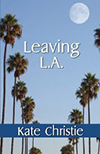
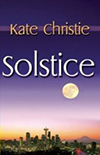
While I have been hyper-busy recently learning to be a new parent, an interview and a review of both of my books, Solstice and Leaving L.A., have come online. Kate West, a Seattle writer who contacted me a few months ago about writing the interview and reviews, emailed to let me know that both pieces have been published at OUTView and Edge Media Networks, which has localized online LGBT content centered on cities across the country.

Here are a few of Kate West’s questions and my corresponding answers:

How did you come to start writing?

I wrote my first collection of short stories in fifth grade, about a clumsy, literate, crime-fighting dog I called the “Dogged Crusader,” and was hooked. I turned to novels the summer before my junior year of high school when I was required to wear rather unattractive head gear for my braces, 24/7. Too embarrassed to venture beyond my driveway, I holed up in the den and churned out four hundred pages of a science fiction novel, “Future Run,” about a teen-aged girl who travels a hundred years back in time from 2085 to escape a global war. Who knows-without braces, I may never have been bit by the novel-writing bug! But probably I would have. I think I was born a writer, just like I was born a lesbian.

Your first two books have been lesbian romances. Do you plan to continue in that genre or would you like to write in other genres as well in the future?

I like writing romances because I’m a romantic at heart. I also see writing lesbian love stories as a consciously political act-the love that dare not speak its name takes center stage in gay and lesbian romance novels, which explore the many facets of the part of queer life that is most denigrated by the dominant culture. That said, I also write other kinds of stories. Currently I’m looking for a publisher for a novel I wrote a few years ago, Family Jewels, a family drama about the fractured relationship between a twenty-something lesbian and her conservative father. I’m also two-thirds of the way through a new book that, while a love story, probably isn’t a traditional lesbian romance, either. Rather than conforming my writing to a single genre, I try to write the stories I feel compelled to tell, with the awareness that some novels might be more difficult to find an audience for than others.

I understand you recently became a mother! How has that changed your life and affected your writing?

As a mother yourself, I imagine you know all about the sleep deprivation and mind-blowing joy and utter terror that follows the addition of a newborn to the family. In my case, I also went back to work nearly full-time about a month before our daughter was born, so I’m juggling that as well. I won’t pretend my writing routine hasn’t suffered. It definitely has. But mainly I feel like I’m in a time of flux, a period of growth that’s percolating somewhere in my subconscious. I’m still interested in writing about the old stories I’ve always been drawn to, but I also feel my mind and heart expanding to encompass more. Of course, that might just be the psychedelic effects of persistent sleep deprivation talking.

To read the full interview, visit EdgeSeattle.com or check out the PDF version.

Book Review on OUTview and Edge
At the same time, Kate West’s combined reviews of Solstice and Leaving L.A. also went up on OUTview and Edge. Again, here is a taste of what she had to say:

On Solstice: The story is told in first person narrative by each of the characters in turn, flipping back and forth between the thoughts, feelings and perspective of each protagonist. I enjoyed this view into the brains of Sam and Emily, and I found it entertaining and interesting to get the take each of the characters had on the same situations. And, I have to admit I loved reading about the streets, neighborhoods, zoo and even our local WNBA team here in Seattle. Christie did an excellent job on the details and this first effort was an enjoyable read.

On Leaving L.A.: This novel moved me and I felt much more connected to the characters than the ones in Solstice. Maybe it’s because the characters are a little older or because I could relate to some of Tess’s and Eleanor’s experiences a little more. But, regardless, I actually teared up when finding out Tess’s childhood secrets.

Wrap-up: Both of her books can be purchased through Bella Books, Amazon.com or through your local bookstore. After reading these two novels, I’m really looking forward to Christie’s third called Beautiful Game, due out in July 2011.

To read the full combined review, visit EdgeSeattle.com or check out the PDF version.

Posted in Interviews, Lesbian Fiction, Non-Biological Motherhood, Parenting, Reviews, Writing | Tagged , , , , , , , , , , , , | Leave a comment

Why I haven’t Written Lately…

Just thought I’d post a few reasons for why I haven’t written much lately.

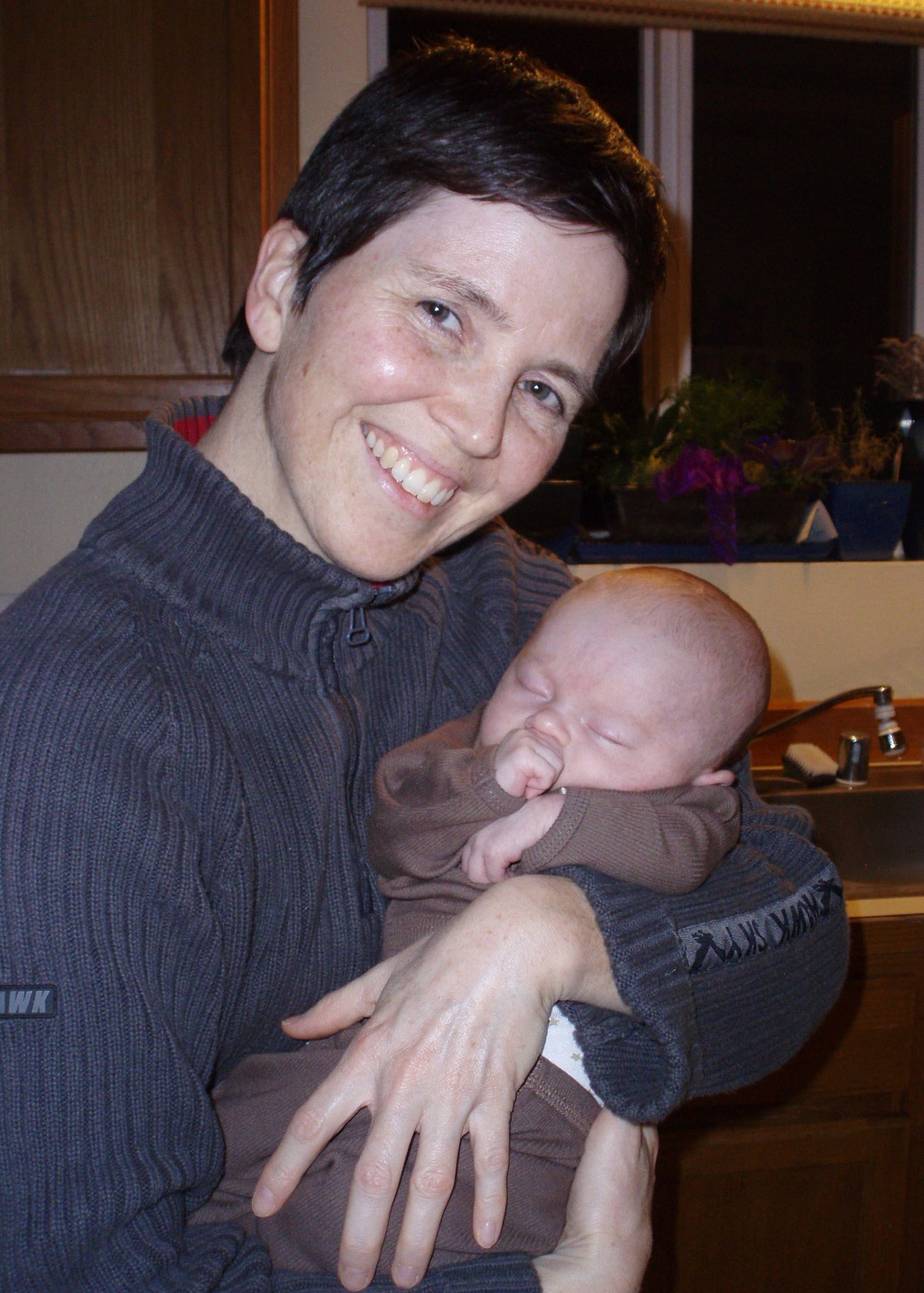
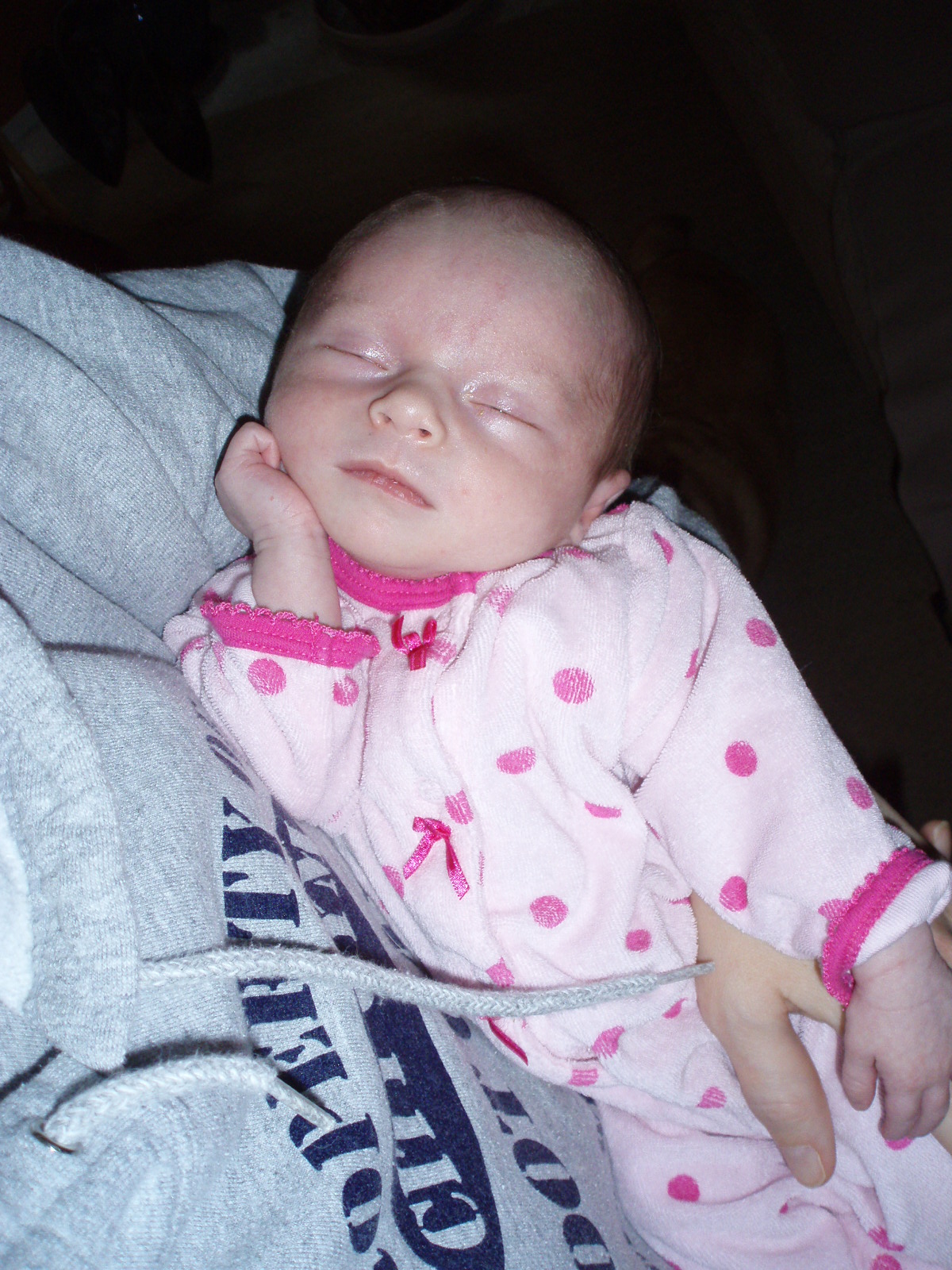
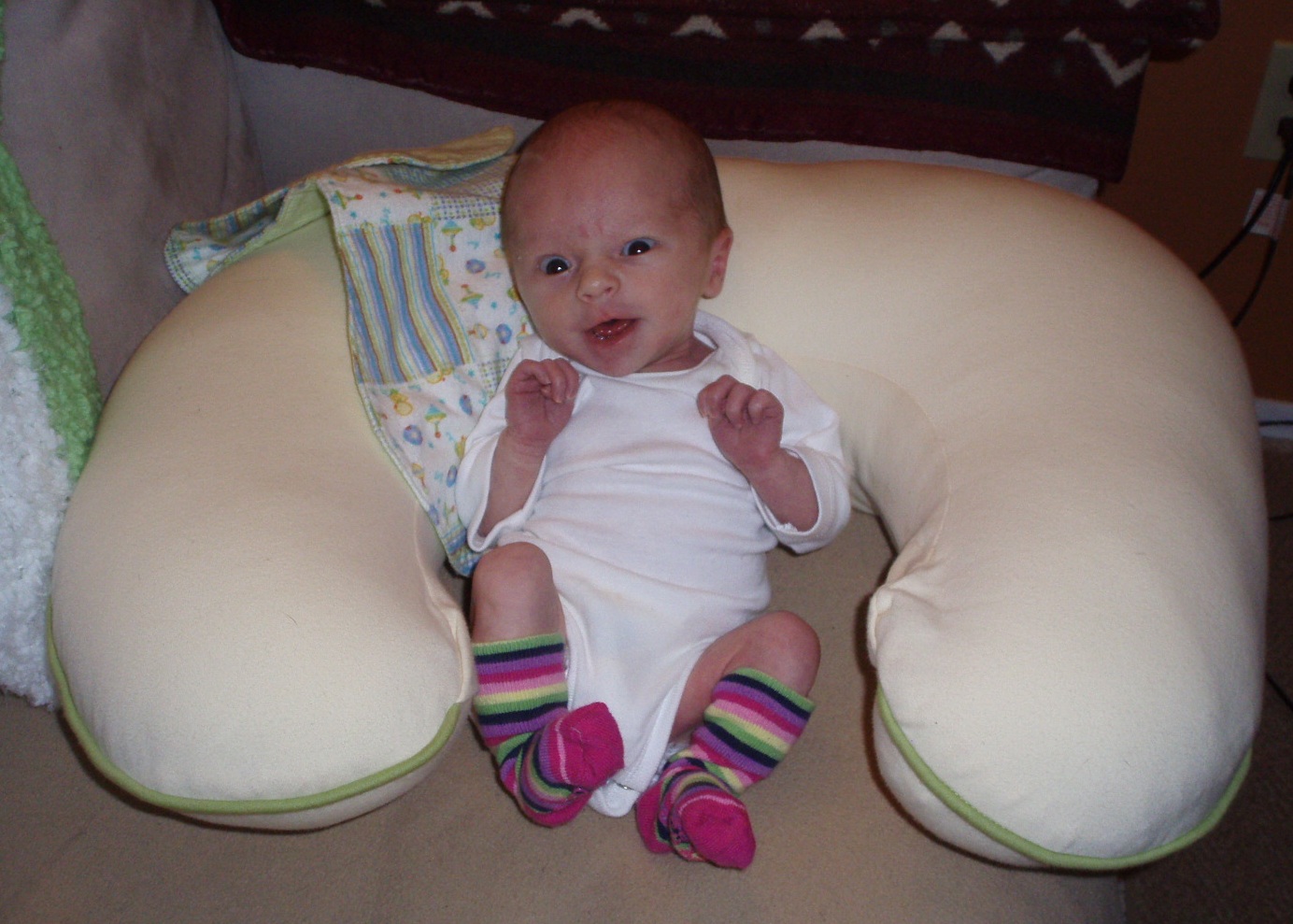
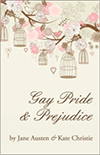
Alex, March 30

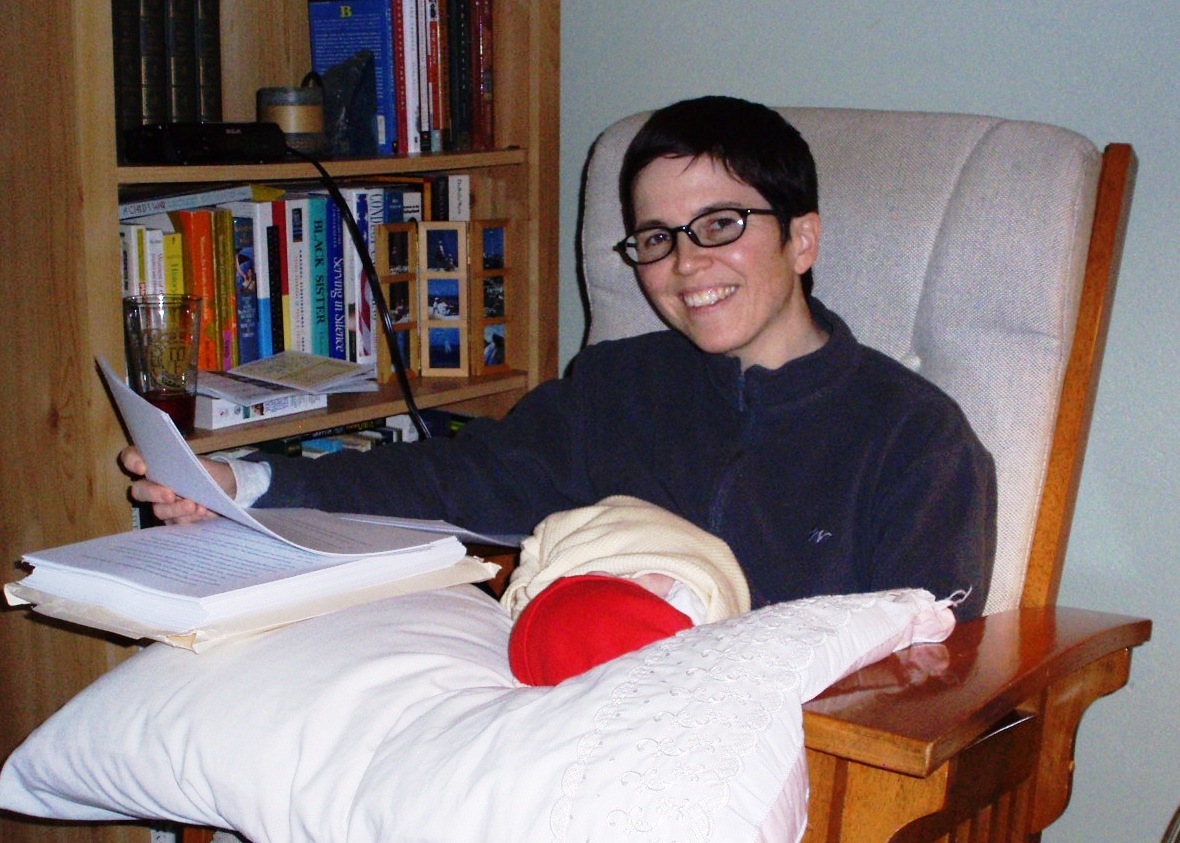
Family Photo, April 3

Alex, March 31

Me and Alex, April 8

Posted in Family, Non-Biological Motherhood, Parenting | Leave a comment

Priceless

This morning, I rolled over in bed, glanced at the bedside clock, and did the calculation that has become my post-birth morning ritual—six and a half hours of sleep. This is my record so far, made possible by the fact that today, Sunday, my lovely wife Kris was kind enough to put the baby down for her early morning nap in the guest room. Sleep, glorious sleep! I have always been a fan, but now more than ever.

Last week was my first full week back at work since our daughter was born. She’s three and a half weeks old now, and we’re still learning her routine and ours. Add to the equation that I have revisions due on a manuscript at the end of next week, and you might understand why sleep is such a valuable commodity in our household right now, one that Kris and I are becoming accomplished at bartering: “If you take the nine-to-midnight shift, I’ll get up with her in the middle of the night.” And, “If you take her now, I’ll wash the bottles and mix the formula so you don’t have to later.” Former college soccer teammates, we understand the value of teamwork in combating the inevitable fatigue of parenting a newborn.

The extra sleep Kris gifted me with last night has given me the energy to sit down before the computer and put words to screen on a topic I’ve been pondering the past few days. Have you ever been introduced to a new word or idea and then proceeded to see it multiple times in quick succession? Well, a related synchronicity happened to me this week in the form of a new-to-me concept: the notion that birth and death, matching bookends to every person’s life regardless of gender, race, or nationality, are in fact very similar experiences.

This idea is beautifully explored in an audio book I’ve been listening to this past week, Making Rounds with Oscar: The Extraordinary Gift of an Ordinary Cat by David Dosa. The author is a doctor who specializes in geriatrics, while Oscar is a feline resident of Steere House–a nursing home where Dosa works–who can apparently predict when a person is about to die. I knew nothing about the book when it popped up on the list of IPod-compatible audio books available for check-out on my local library’s online catalog late last Sunday night. But I needed something to listen to on my daily commute, and I was too tired to spend much time searching, and it sounded reasonably interesting and potentially uplifting to an animal-lover like me. Am I glad I clicked the download button! A natural storyteller, Dosa manages to impart useful medical knowledge along with poignant ruminations on the human condition as he relates the remarkable, thought-provoking story of Oscar the cat.

At the beginning of the book, Dosa reports that he was skeptical when the staff at Steere House first told him that Oscar would sit with patients who were dying, offering comfort and peace to patients and loved ones alike. The quintessential scientist, Dosa decided to investigate these reports of Oscar’s incredible timing. The resulting memoir-like narrative offers more information on end-of-life care and the experience of watching a loved one die than it does about Oscar the cat, but I didn’t mind this fact. Building his story around interviews with family and staff members, Dosa explores the nature of illness and death, the process of aging, the difficulties of caregiving, and the occasional failings of our existing health care system.
He does, of course, also discuss Oscar, the book’s titular subject. One of the family members Dosa speaks with sums up Oscar’s actions in a way that particularly resonates with me. The interviewee, whose elderly father died at Steere House, describes Oscar’s presence at the very end as special because somehow, the cat made the process of dying feel like a normal part of life. Just as natural, the woman tells Dosa, as a child’s birth.

I heard this part of the book Friday afternoon on my way home from work. When I got home, I took the baby from my wife and, while she did things like drink a glass of water, change her clothes, and perform other, similar functions that hadn’t been possible during her lone-parenting shift, I bounced our daughter on the exercise ball to soothe her and told Kris about Dosa’s book. We talked at length about the stories I’d listened to that day, including the comparison between the process of birth, still vivid in both of our memories, and that of death. Neither of us has ever sat with a loved one as they died, but we agreed that after experiencing our daughter’s birth and the complications that accompanied Kris’s labor—in another time and/ or place, both mother and child could have died—we felt that we had a better idea of what to expect from the act of dying.

This is where the uncanny factor of synchronicity comes in. Twenty-four hours after Kris and I had this conversation, our sister-in-law, G., called. She and Kris’s brother had recently been present at the death of a friend in late-stage terminal cancer. As she recounted the story of her friend’s final evening, I could hear Dosa’s conversations with the family members of Steere House patients overlaying G.’s words. The similarities were remarkable, and I realized that just as all new parents have a birth story that, while unique, typically shares many commonalities with the stories of other parents of newborns, so too might many death stories intersect.

At one point, G. told us, the terminally ill friend opened her eyes and said to those gathered at her bedside, “I’m losing it.”

“It’s okay,” her friends and family members told her. “We’re here with you. We’re not going anywhere.”

The dying woman closed her eyes. A little while later she looked up and said, “Now what?”

“Now you go to sleep,” one of her loved ones said.

She closed her eyes again, and within a matter of hours, she was gone.

At the very end, G.’s friend was lucky. She died at home, surrounded by people who loved her and were willing to accompany her as far as they could along her final journey. She experienced the last act of her life surrounded by love and light. She died in a way that, I would imagine, many of us might hope to.

In Dosa’s book, the patients are lucky at the end, too. They have a devoted companion who comes to them and offers emotional support and physical comfort at a time when they and the people who love them need it most. Throughout the book, Dosa asks why Oscar does what he does. I haven’t reached the last chapter yet, but I imagine there is no answer to this question. We can’t ask Oscar, and he can’t tell us; such is the nature of human-animal interaction. Probably it’s enough that he’s been there for so many people.

At our daughter’s birth, it was the dedication of the many people in the room—our midwife, her assistant, the nurses, the doctor—that saw Kris and me through, and that made Alex’s story a dramatic account of beginnings rather than a tragic one of endings. For that, I will be eternally grateful.

This, of course, makes sleep deprivation seem like a very small price to pay. As I told Kris a few days ago, I keep thinking of describing our daughter’s birth in the form of a MasterCard commercial: “Unplanned hospital birth, X thousands of dollars; home-visit nurses, X dollars a day; healthy and happy mother and daughter, priceless.”

Because, well, they are.

Posted in Family, Non-Biological Motherhood, Parenting, Writing | Tagged , , , , , , , , , , , , , , , , , , , , | Leave a comment

A Company of Women

Birth Junkies and the Not-So-Junkied
A few weeks ago I blogged about the changes to Washington state birth certificates that would allow my name to go on our daughter’s birth certificate as a “natural” parent from day one. Well, that blessed event has happened–my wife Kris gave birth to our daughter Alexandra on 2-23-11 at 10:07 AM, and the two moms have been blissed out, sleep-deprived, foggy, and mildly alarmed (“Is that what baby poop is supposed to look like?” “Do all babies bray like a goat?” “Could her head fall off if I don’t support it properly?”) ever since.

At our initial childbirth class a couple of months ago, our instructor described herself as a “birth junkie.” After she had her first daughter ten years ago, she said, she walked the streets of our small city seeking out listeners to whom she could tell her birth story. She would impatiently allow said listeners to share the story of their birth experience, waiting for the moment when she could launch into a full-blown, dramatic, too-much-information recounting of her child’s entry into the world while her audience looked on, a polite smile masking their slightly horrified expression.

One thing I know after my daughter’s birth: I am not a birth junkie. In fact, when the 34 hours of labor were over and my wife was lying in her hospital bed spent and thankfully painless due to the epidural she finally allowed us to convince her at hour 30.5 to have, I looked around at the room full of people who had assisted in Alex’s birth and wondered aloud, “Why the ?#$% would you want to go through this every day?”

I’m not saying the experience wasn’t magical, or life-altering, or deeply moving. Watching Kris draw on reserves of seemingly impossible strength, observing the amazing teamwork and dedication among the two nurses and doctor at the hospital where we transferred after it became clear that the baby was facing the wrong direction and couldn’t be born at our local birth center, witnessing that final moment after Carrie, the charge nurse, told Kris to point her pelvis ceiling-ward and aim the baby at one of the sprinkler heads and Alex came shooting out into the doctor’s hands, squirmy and slick and already screaming–these were all unforgettable, life-changing moments to be sure. But I can honestly say I would rather never again spend a day and a half watching Kris eventually vanish into the waves of pain overtaking her while I stood helplessly by, or rail at the first nurse we encountered at the hospital who insisted on holding a faulty baby heart-rate monitor to Kris’s abdomen for an hour straight and intoning that we should be prepared for an almost certain C-section, or call Kris’s mom and my parents and tell them we were at the hospital and things weren’t looking so good.

We thought we were prepared for whatever could happen, but once our beautiful birth center plan went out the window and we ended up in a local hospital known for an extremely high C-section rate, events began to collide in intersecting “what-if” moments of hope, heartbreak, fear, anger, cautiously renewed hope, heartrending joy, terror, and relief, as we were forced to make major decisions on five hours of sleep in the previous 48 hours. But I guess that’s a good precursor for parenting–trying to stick to a plan as life throws its usual curve balls thereby granting you the questionable privilege of experiencing the full range of human emotions in the space of a single day.

When I raised the question of why anyone would want to make childbirth their daily work, our midwife and her assistant, the two nurses and the female doctor (a company of women, fitting for we two unintentionally separatist Smithies–even our dogs are female) all exchanged puzzled looks as if the question had never occurred to them. Maybe it hadn’t. Maybe, like our childbirth instructor, they’re birth junkies, too. Kris and I are both glad they are, because that group of women saved us, in a way, and saved our baby, too.

Birth Certificates and Bureaucracy
The day our daughter was born, the nurses handed us a packet of papers that included a “Paternity Affidavit.” When I asked the nurse about the Female Domestic Partnership form that would replace the traditional paternity form, she offered to get in touch with the records department at the hospital. Being my mother’s daughter, I picked up the phone in our room, dialed 0, and was put through to the records department myself. A very nice youngish woman admitted she didn’t know anything about the form but thought this development was “really exciting.” I agreed, and we hung up after she promised to find us the correct form. A half hour later, our nurse brought the form–the nameless records department employee had tracked it down, made extra copies for future use, and walked our copy over to the childbirth wing in person.

This positive customer service experience made the phone call I received a week later from an oldish woman in the hospital’s records department all the more disappointing. When I answered, the caller asked if I was Kris, as had been happening all week in calls from the hospital, visiting nurses, and others. I once again explained that I was her partner, and there was a long pause at the other end.

Then: “I can’t put your name on the birth certificate because you’re not married.”

Technically, we are legally married. But the Defense of Marriage Act (DOMA) ensures that Washington state has the federal government’s blessing to disregard our Massachusetts marriage license. I didn’t bother to share this fact with the grouchy hospital records department employee. I simply informed her of the state Health Department’s new policy regarding female domestic partners and offered to put her in touch with our lawyer friend if she had any questions. This apparently did the trick. When I contacted the local county records office the next day, the clerk confirmed that my name indeed was on the form the hospital had sent to them. And only a single vague threat of legal action was required to enforce our newly recognized rights!

One last note–the day our daughter was born is the same day the Obama administration announced publicly that it would no longer be defending DOMA in court. Fate? Kismet? Karma? Either way, February 23, 2011, will be doubly celebrated as a historic day in our family.

Posted in DOMA, Family, LGBT rights, Non-Biological Motherhood, Parenting | Tagged , , , , , , , , , , , , , , , | 4 Comments