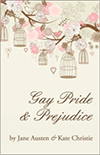
Between the Lines; or, Why I Wrote a Gay Variation on Pride and Prejudice

With my new book, Gay Pride & Prejudice, due to release at the end of this week (March 31), I thought I would take a few minutes to offer up some of the reasons I decided to co-opt and alter one of the most beloved novels in the history of English literature. Here goes:

  1. I love Austen, and P&P is one of my favorite (or favourite, as Jane would have written) novels of all time. Like other self-professed Janeites, I love immersing myself in the world of P&P—the well-drawn characters, the witty dialogue, the brilliant satire, the simultaneous undermining (Elizabeth and Darcy) and reification (Jane and Bingley) of the notion of love at first sight, and the understated critique of marriage and the social status of women in Regency England.
  2. I am also exceedingly tired of reading the classics of English literature and finding only straight people and straight relationships seemingly portrayed. I say seemingly because many a queer reading exists of literature penned by non-straight authors—Moby Dick, Leaves of Grass, Mrs. Dalloway, Orlando, Of Human Bondage, The Picture of Dorian Gray, and so on and so forth. But you typically have to read between the lines to uncover gay and lesbian representations pre-twentieth century. Positively portrayed queers remain elusive in the Western literary canon, even in more recent works by self-professed queer writers. The Well of Loneliness, for example, the 1920s lesbian literary classic by Radclyffe Hall, is one of the most depressing novels I have ever read. Not exactly in the vein of “It gets better,” by any means.
  3. If zombies and vampires can be rewritten into the classics, thanks to the current trendiness of literary mashups, then why not homosexuals? There is in fact a plethora of factual evidence of our existence—after all, our likeness can be captured on film, unlike some of the monsters finding their way into the formerly human literary canon.
  4. While we’re on the topic of the presence of queer people in or out of the literary canon, let me just say right now that I fully support the notion that homosexuals have existed since time immemorial, despite assertions to the contrary from the mainstream academic community. Why, if we accept that Sappho was the first known woman-loving woman in Ancient Greece, and that her male contemporaries engaged in homosexual relationships, would we believe the nay-sayers who claim that it is “arrogant” to presume that queer people existed in the pre-modern era? Personally, I believe that it is “homophobic” to assert that we may not have. What else could convince someone to suggest that gay folks existed for a few centuries, ceased existing for a couple of thousand years, and then suddenly re-emerged in the late eighteenth century when a prescient German writer invented the term “homosexual”? The invention of the signifier (“homosexual”), in my opinion, does not preclude the prior existence of the signified (“gay people”). After all, laws and scriptures against sodomy and other homosexual behavior have been on the books continuously in the West since ancient times, and they could hardly have been enacted if queer people hadn’t already existed, could they? Modern queer life is, obviously, different from earlier incarnations. But that doesn’t mean there weren’t women who loved women, and men who loved men. They may not have conceived of themselves the way modern queers do; but then again, they might have.
  5. Similarly, I am a bit tired of the insistence that “romantic friendships” between women of bygone eras cannot be proven to be sexual in nature. That may be true in many cases, but it is equally true that these relationships cannot be proven to be asexual in nature, either. And yet that is the prevailing norm, despite the existence of compelling evidence to the contrary: Anne Lister, an upper-class Englishwoman and a contemporary of Jane Austen’s, who left behind coded journals describing her sexual relationships with a number of women. Jane English, who wrote the script for the BBC film The Secret Diaries of Miss Anne Lister, noted in a recent Ms. magazine interview that her imagination was captured by one of the diary entries that described Anne’s 1819 meeting with her married female lover at a hotel in Manchester. English says she read this journal entry and “thought: ‘Hang on. These two women are meeting for illicit sex in a hotel—and this is the era of Jane Austen!’… We’re so used to the genteel world represented in Jane Austen… [but] this projects a very different image of women at the time, as being sexually voracious—or just as having a sexual appetite!” Here, here. The supposed dearth of historical evidence of women’s sexual activity, homo or hetero, does not indicate that women of the past were not, in fact, sexual beings.
  6. And finally, you’ve likely heard the saying, “Be the change you want to see in the world.” For writers, the corresponding adage is, “Write what you want to read.” I wanted to read the queer version of P&P—as close to the original as possible, somewhat faithful to the era, without a whole lot of smut—so I decided to write Gay P&P. Now, whether or not I succeeded in creating an even somewhat tolerable variation on Austen’s brilliant original is for you, fair reader, to decide…
Posted in Feminism, Fiction, Gender, Lesbian Fiction, Women's equality, Women's rights, Writing | Tagged , , , , , | 9 Comments

Catching Up

I haven’t posted in a while, and like all lapsed bloggers, I can claim a multitude of reasons, the most compelling of which has been a new writing project that is almost ready for release. In the meantime, I thought I would share some photos of what I’ve been up to since my last entry. Enjoy! And look for a note at the end of this post about my soon-to-be-released novel…

DECEMBER

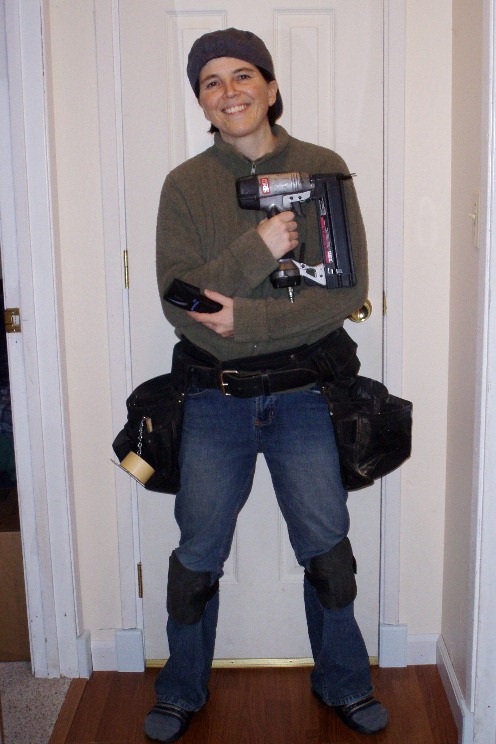
Kris, her father, and I install new laminate floors in the living room
and hallway of our little house in the woods.

Living room before

Our living room floor: BEFORE

Power saws

Yay, power tools!

Living room floor after

Living room floor: AFTER

Nail gun and tool belt

Enough said...

Also in December…

Leg cast

On the Winter Solstice, Alex breaks her leg...

Christmas Eve

...but it doesn't slow her down.

Family, Christmas Eve

Family photo on Christmas Eve

Sign for book

Alex learns the sign for book just in time for Christmas morning


January

Avocado

Alex learns to feed herself--sort of.

Snowstorm

The Western Washington Winter Snowstorm of 2012

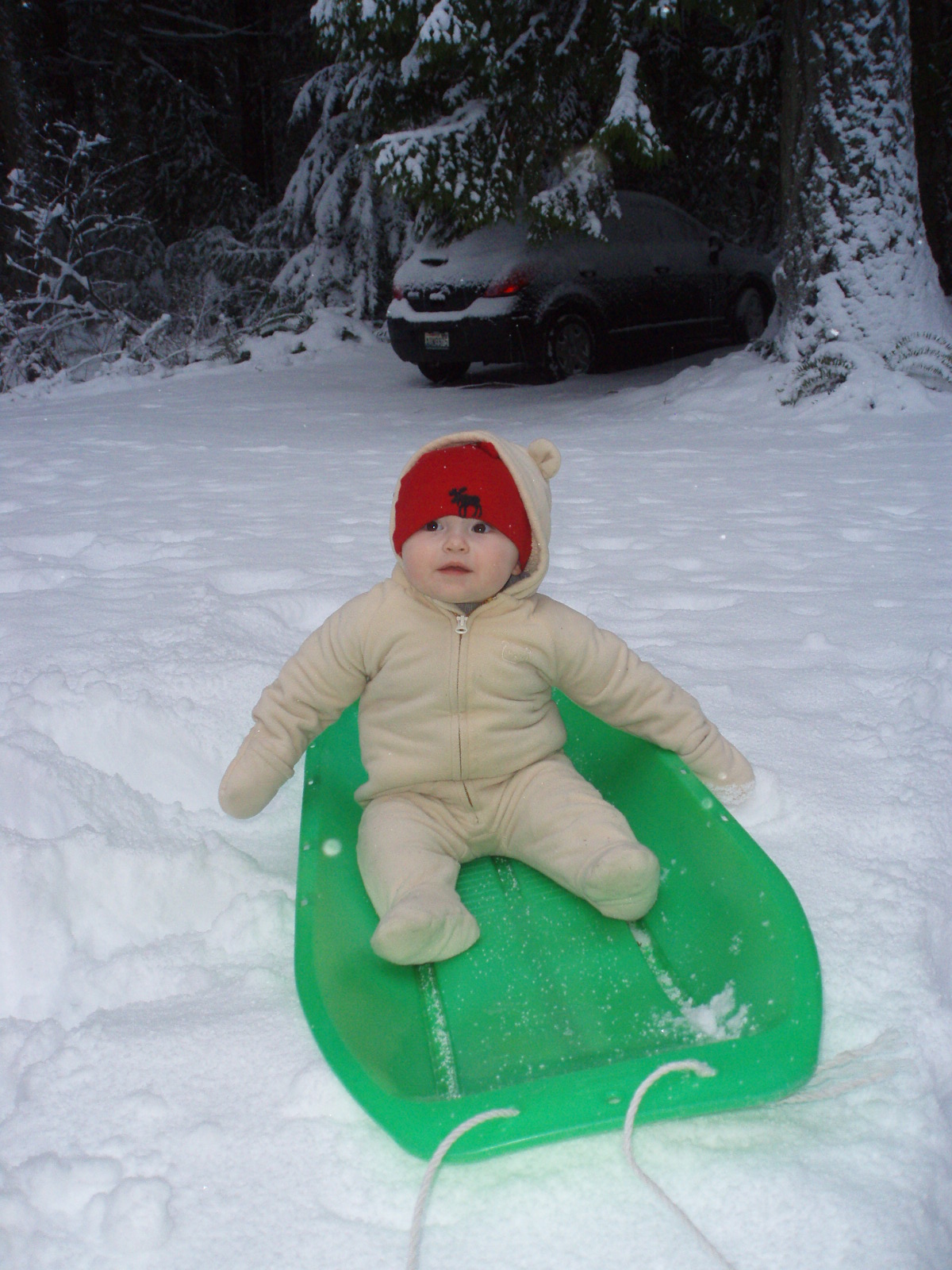
Sledding

Alex's first sled ride

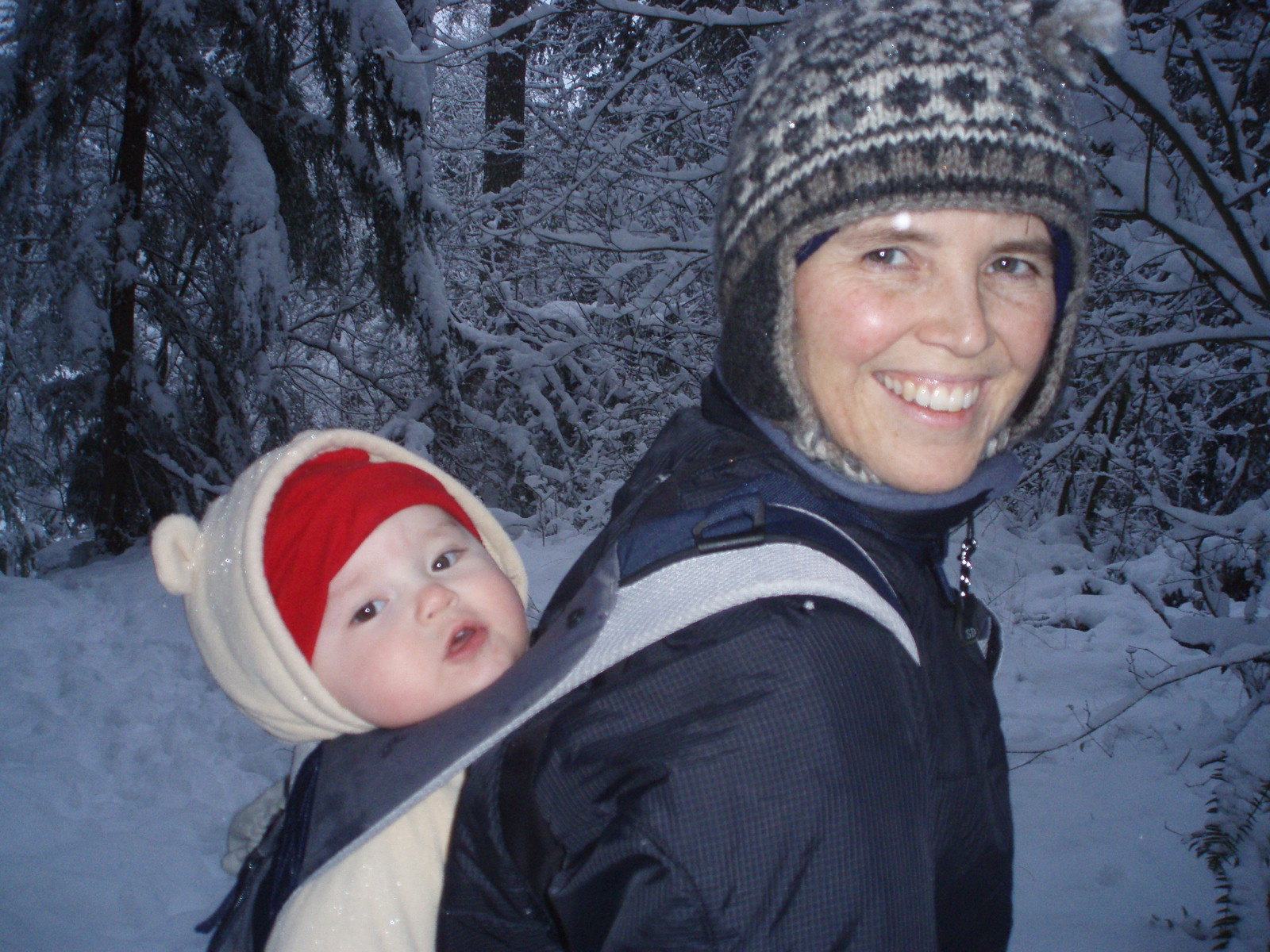
Winter hike

Snow-hiking with the Ergo pack


Walking

Happy girl learning to walk

February

Touchdown

Getting ready for the Super Bowl--touchdown!

Walking the dog

Walking the dog on the first warm day of the year

Birthday Girl

Alex turns one!

Presents

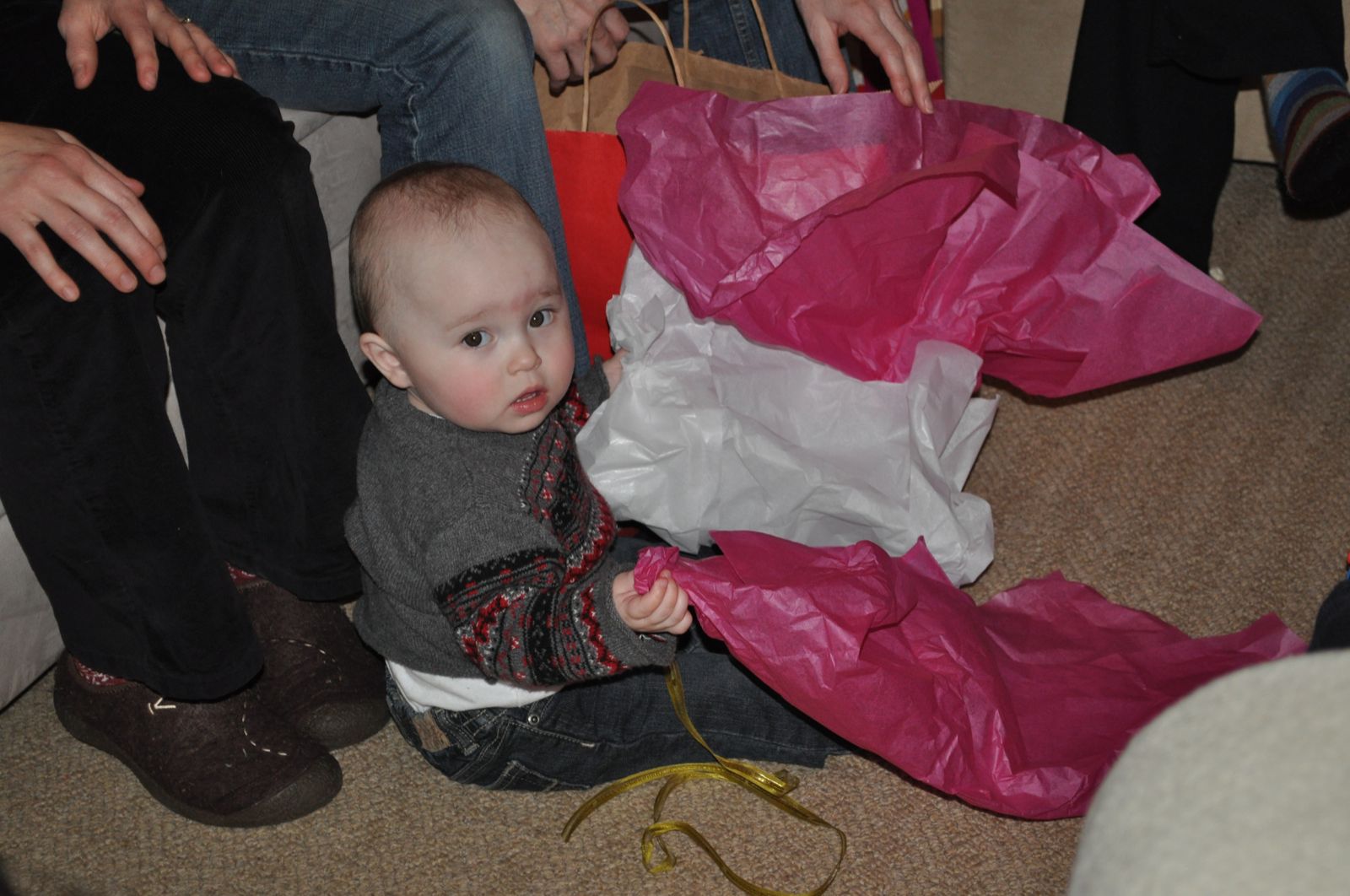
Opening presents at her birthday party...

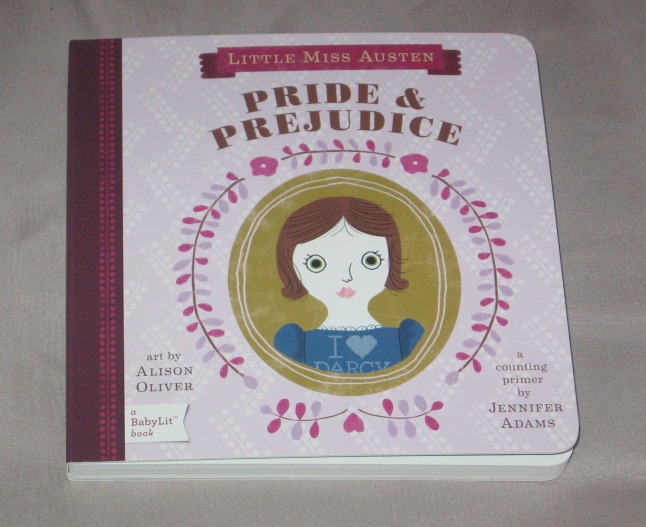
Pride & Prejudice for kids

...including "Pride and Prejudice" for kids!

Which segues nicely into my final catch-up picture: an image of the book project that, in conjunction with the life events noted above, has largely kept me from blogging for the past couple of months: Gay Pride & Prejudice, a queer take on the classic Jane Austen novel.

Why Gay Pride & Prejudice, you might ask? Well, as a long-time Jane Austen fan, I was fascinated and only a little bit nauseated by the release a few years ago of a variation on P&P featuring ninja warriors and the living dead. Soon after reading an article on the literary mashup phenomenon surrounding Austen and other classic authors and historic figures, I found myself wondering, “If zombies and vampires, why not gays and lesbians?” Not that monsters and queers have anything in common, of course, other than a long history of being denigrated and feared by the general public—a reputation, I would argue, more deserved by the former group than the latter.

And why shouldn’t we write ourselves back into history, back into classic literature? For centuries, historians and canonical writers have ignored the existence of gays and lesbians. High time, then, I say, that we queer the classics! With that goal in mind, I asked myself the question: “What if some among the characters of Austen’s Pride and Prejudice were gay? What then?”

The revised novel, which like its monstrous inspiration features at least 85% of the original text, is nearly ready for release, and will be available as an eBook (Kindle, Nook, iPad, ePub, etc.) first. Keep an eye out for more details in the coming weeks… 

Gay Pride and Prejudice


Posted in Family, Parenting, Writing | Tagged , , , , , , , , | 8 Comments

Lions and Vikings and Bears, Oh My

The other day, Kris came home from Target irate. That actually doesn’t happen all that often—she’s from Minneapolis, where Target was born and still resides. (Wait, that sentence sounds as if I think a corporation could be a person…) Also, her best friend works at Target headquarters in Minneapolis, so as some of you already know, my wife’s loyalty remains staunchly with her hometown chain–despite the $150K Target donated last year to an anti-gay politician in Minnesota. (To be fair, Target is a longtime sponsor of the Twin Cities Pride Festival, so their gay rights stance is a bit schizophrenic. Or “neutral,” as their PR department would have me tell you.)

Kris’s loyalty to Target isn’t surprising to me. I have long benefited from her strong sense of fidelity, as have her beloved Minnesota Vikings, currently running dead last in the NFC North. (Sorry–as a Bears fan, I couldn’t resist.) So when she came home from Target a few days ago railing on their children’s winter clothing collection, I listened. Which isn’t to say I don’t usually listen to her rants and rails. Really.

“I was looking at hats and mittens today, and you’ll never believe the selection,” she told me as we putzed around the kitchen getting our dinner and Alex’s baby food ready.
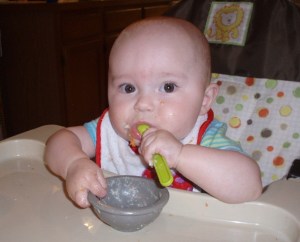
Dinner time

At some point in the past few months, we have evolved from eating frozen meals separately standing up at the kitchen counter while the other person holds the baby to actually sitting down most nights at the dining room table for a family dinner, Alex strapped into her high chair—care of a Target gift card—close enough to feed but not close enough to practice her favorite magic trick: yanking the tablecloth out from under our dishes. (Needs a bit of work, to be honest.) True, we still mostly dine on frozen foods or reheated leftovers, but eating together makes a nice change.

“Good selection or bad?” I asked, filling a glass with filtered water from the fridge.

“Good if you’re a boy. There were all these cute sets with animals on them, bears and penguins and lions and dogs, but on the tag, you know what they said?”

“What?” I asked, sensing what was coming from the irritation in my wife’s voice.

Alex's (Infant Boy) penguin outfit

“‘Infant Boy.’ Not just ‘Infant’ but ‘Infant Boy.’ And guess what they had for girls?”

“What?” I repeated dutifully.

Hello Kitty and Minnie Mouse hats in different shades of pink. Can you believe that?”

Actually, I could. This was just more of the same in our gender-neutral baby attire woes, as readers of my previous blog post “Dispatch from the Gender-Bending Wars” might recall. Still, irritating nonetheless.

“What if you were the kind of person who didn’t want to put your daughter in something that had a boy’s tag on it?” Kris asked. “Then you would only have two choices, both pink. That hardly seems fair.”

“Especially given that there are more girls in the world than boys,” I pointed out. (Though even that is probably changing with the proliferation of sex-selective abortions in India and China, notoriously girl-negative nations.)

“I know, right?” Kris said, and offered Alex a spoonful of homemade strained peas.

Alex made her usual grunting sounds of joy and took the mouthful, clenching her baby teeth (all six of them) on the spoon and refusing to let go as she slurped up the mashed peas. A good eater, our Alex. Good sleeper, too. We know—we’re lucky.

“Whatever happened to the ’70s?” I asked. “Women wrote letters to manufacturers and advertisers to protest sexist practices, and yet here we are again. It’s like the Second Wave of the women’s movement never even happened.”

“I understand that some women like pink,” Kris added, “and that’s fine. But there have to be other options for girls than just pink princess gear.”
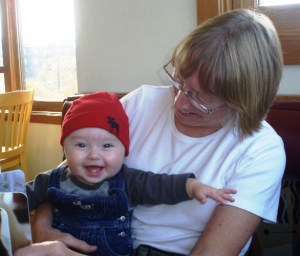
Alex in overalls with Grandma

There are other options, of course. Kris and I choose Alex’s gender expression on a daily basis, from the toys we give her to play with to the clothes we pick for her to wear. But every time I dress her in my favorite gray onesie or her overalls with the dog or her brown bear snowsuit, none of which are “supposed” to be for a baby girl, I consider the fact that as soon as we leave the house we will likely become the recipient of commentary from strangers who have consciously or unconsciously assumed the role of cultural gender police.

In May, shortly after I wrote my first blog post on gender non-conformity and parenting, the “Genderless Baby” in Toronto made headlines. Baby Storm is being raised in a gender-neutral environment, with parents who refuse to tell anyone outside of a narrow circle the child’s biological sex in order to allow him or her to escape gender conditioning as much as possible. When the press got wind of the story, it went viral. As did the public’s wrath—articles and reader comments abounded on web sites detailing the certain trauma being inflicted on the child by its non-conformist parents. A number of child development experts also weighed in on the couple’s poor parenting skills and the problems ahead for their three children. Dr. Harold Koplewicz of the Huffington Post noted, “Teaching them that they are only safe—understood, accepted—at home is not a very character-building message.”

Nature vs. Nurture?

And yet, as one HuffPost reader commented, isn’t it the truth? As a one-time girl who preferred bikes to dress-up, jeans to dresses, blue and green to pink and yellow, I can attest to having had to fend off verbal and sometimes physical attacks for my gender non-conformity. As an adult, the same. And as the mother of an as-yet bald baby girl we sometimes dress in “boys’” clothes, I have to say I think things might just be worse now. As Kris said the other night, “It’s like there’s this tremendous backlash against anyone who doesn’t fall in line.”

The Genderless Baby incident is a perfect example of North Americans’ discomfort with gender non-conformity. According to another HuffPost article, Dr. Ken Zucker, a Toronto expert on children and gender identity, indicated that “the story has caused anxiety among people who are now wondering how they became who they are.” By reviving the nature vs. nurture debate in a controversial manner, Storm’s parents became a focal point for the anxieties of a supposedly post-feminist society that on the one hand likes to claim that equality between the sexes has been (mostly) achieved and yet on the other still dictates and closely monitors acceptable behavior, traits, and desires for both girls and boys.

Go Bears!

Last night, my friend Josh and I decided to take Alex to a nearby sports bar to watch the Chicago Bears play the Philadelphia Eagles on Monday Night Football. I donned my retro Walter Payton jersey, purchased in 1994 for $2 from a Chicago thrift store, and dressed Alex in the Bears onesie Kris recently brought home from a local consignment shop. As Josh and I sat down at a table on the edge of the lounge area (no babies allowed in that bar), the waitress approached with menus.

“What a cute little boy,” she said, smiling down at Alex.

“Actually, she’s a girl,” I corrected her.

“Oh, I’m so sorry,” the waitress, still just a girl herself, said, clearly flustered.

“That’s okay. She doesn’t exactly look like a girl, especially in this outfit,” I offered, trying to make her feel better.

“Babies should be able to wear anything,” she said. “They’re just babies.”

“Exactly,” I agreed, smiling at her.

Kris finished work and joined us a little later, and the three of us chatted and laughed and watched football and oohed and ahhed over Alex, naturally, who was happiest racing across the wood floor in her little red shoes while holding onto someone’s hands. The game was close, the company good, and Alex was in good spirits despite the relatively late evening hour (7PM). Going out definitely beat staying at home on our own, we all agreed.

But the baby’s bedtime was fast approaching, so at halftime, Kris got ready to take Alex home. Noting activity at our table, the waitress came over and asked how we wanted to split the bill. Kris and I pointed at each other and told her we would pay together. A few minutes later she returned with two bills.

As we looked them over, Josh remarked that he’d been charged for my cranberry juice.

“Right. You two are together,” the waitress said, gesturing to Josh and me, “and she—” pointing at Kris “—is separate.”

“Oh, okay,” I said, not wanting to make a big deal of the error. I glanced at Josh. “I’ll just pay you back later.”

The waitress paused. “Wasn’t that right? You two are together, aren’t you?”

I hesitated. But she’d asked a direct question, and I wasn’t about to lie about who was with whom even if it would make her feel better.

“No. We’re actually together,” I said, pointing at Kris, who by this time had Alex’s car seat tucked under her arm.

“Oh,” the girl said, flustered again, looking from one of us to the other. “I’m so sorry.”

“It’s fine,” I told her. “No worries.”

And it wasn’t a big deal. Kris left with Alex, and Josh and I moved into the baby-free bar area to watch the second half of the game. At one point I wondered if the all-male crowd noticed me with my short hair and my backwards baseball cap, but I had come in with a baby and was still sitting with a man. Probably they assumed, as had the waitress, that I enjoyed heterosexual privilege, just like—presumably—everyone else in the bar.

The Bears won (woo-hoo!) and Josh and I got caught up on each other’s lives and I went home to my wife and daughter in our little house at the edge of a big woods, and all in all it was a good night. But as I locked the front door and turned out the porch light, I couldn’t help but reflect on the rigid expectations of the outside world, the many conventions to which Kris and I have no interest in conforming. We aren’t going so far as to withhold our daughter’s biological sex from strangers or friends, but we are refusing, like many other parents, to abide by accepted rules of gender expression, a choice that no doubt would anger plenty of people–even those whose business it most decidedly is not.

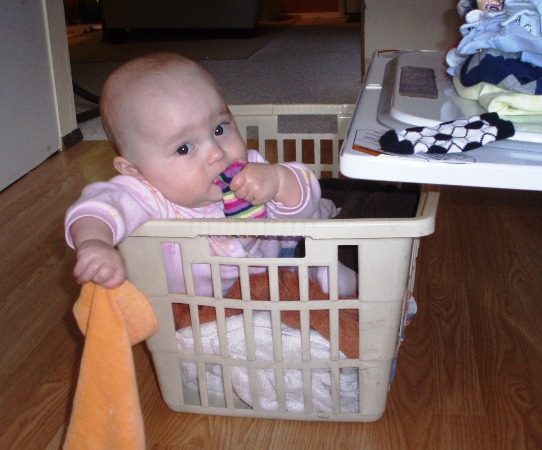
Alex helping with the laundry

The truth is, most of Alex’s clothes up to now (she’ll be nine months old in a few weeks) have been given to us. We’ve purchased probably fewer than two dozen articles of clothing, many of which have been diaper accessories or socks. In addition to new clothing gifts from a variety of quarters, Kris’s brother and sister-in-law sent us hand-me-downs from their two boys while another friend’s sister mailed us a box of clothing that had belonged to her granddaughters. As a result, sometimes Alex wears frilly pink sleepers with flowers and duckies, and sometimes she wears blue and green sweatshirts with obviously more macho puppies (huh?) on them. Sometimes both items at the same time, even.

Kris and I aren’t overly concerned with the diversity of clothing options, though we both tend to prefer non-pink, non-frilly ensembles. But just because neither Kris nor I are girly girls doesn’t mean our daughter won’t be. In fact, like Alex P. Keaton’s parents on “Family Ties,” we often talk about how we could well end up with a child who is decidedly different from either of us. Either way, it’s up to our Alex to figure out who she is and what she likes (as long as she isn’t a Packers fan, of course), and it’s up to us, her parents, to love her unconditionally. Nature and nurture both have something to say about gender, but biological sex alone doesn’t–and shouldn’t–determine how we perceive ourselves and each other.

That, I think, was likely the point that Baby Storm’s parents were trying to make before their voices got lost in the hurricane of gender anxiety swirling around our twenty-first century society.
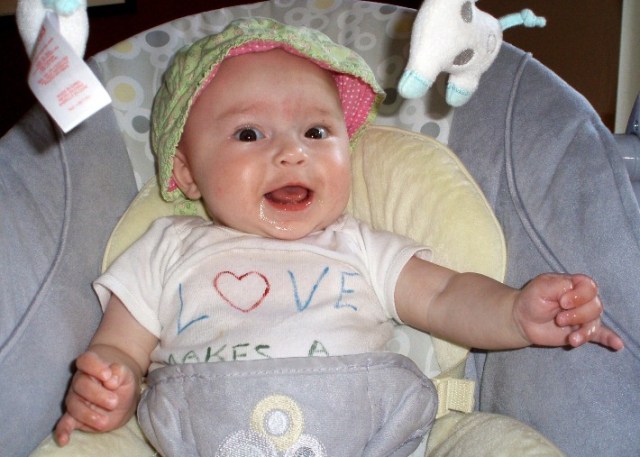
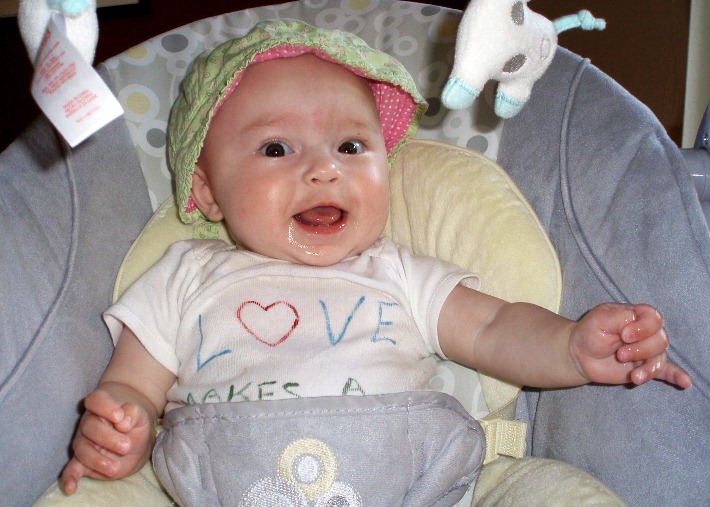
Love makes a family

Posted in Family, Feminism, gay marriage, Gender, LGBT rights, Non-Biological Motherhood, Parenting, sports, Women's equality, Women's rights | Tagged , , , , , , , , , , , , , , , , | Leave a comment

Review of Beautiful Game from Just About Write

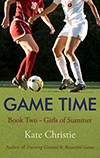
The second official review of Beautiful Game recently posted in Just About Write, an e-zine for readers of lesbian fiction. Reviewer RLynne had this to say about my third Bella Books release:

Christie captures the life of a college jock, from the roughhousing to the incredible tension and excitement of the game.  Even those who are not soccer fans will be gripped by the exciting championship action.  And, she captures the equally incredible sweetness and heartache of a first adult love.

Edited by Katherine V. Forrest, Beautiful Game is a wonderful romp back into the ups and downs of college life.  Christie’s characters are wonderful, and U. C. San Diego is a beautiful place to visit.

I also just received a Facebook note from a reader who said Beautiful Game had provided her a welcome escape from her regular life. In my own household, the last couple of weeks have been a bit of a struggle–dealing with a bad cold, a chronically ill dog, and our daughter’s first illness (the cold I managed to give her). A little bit of escapism here and there, as I well know, can be a wonderful thing!

Posted in Book review, Fiction, Lesbian Fiction, Reviews, Soccer, sports, Women's soccer, Writing | Tagged , , , , , , , , | Leave a comment

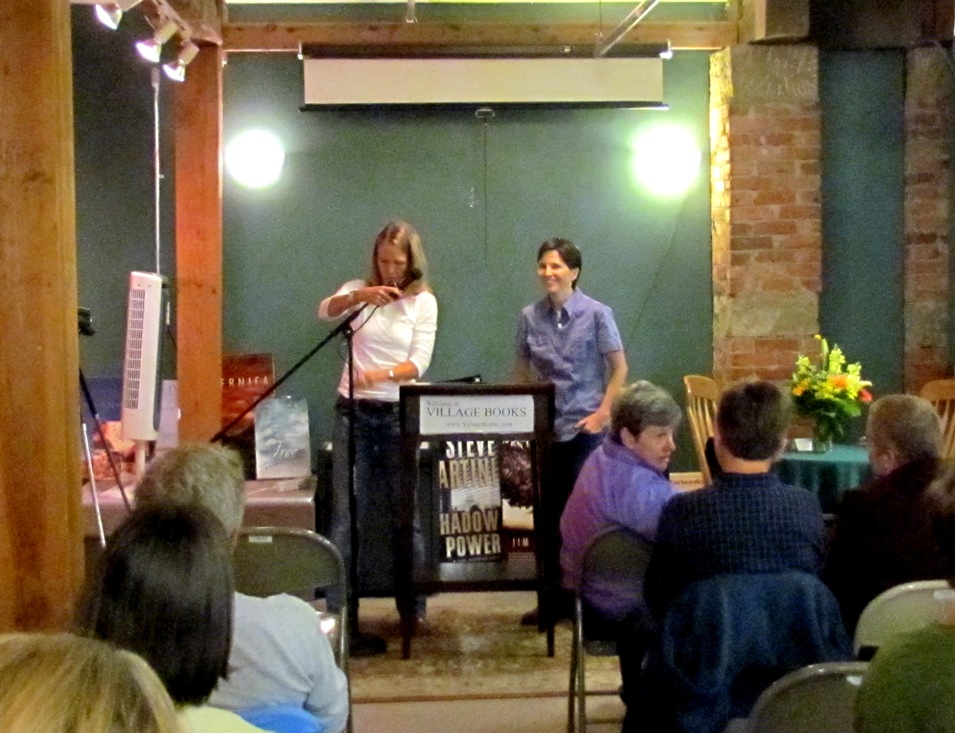
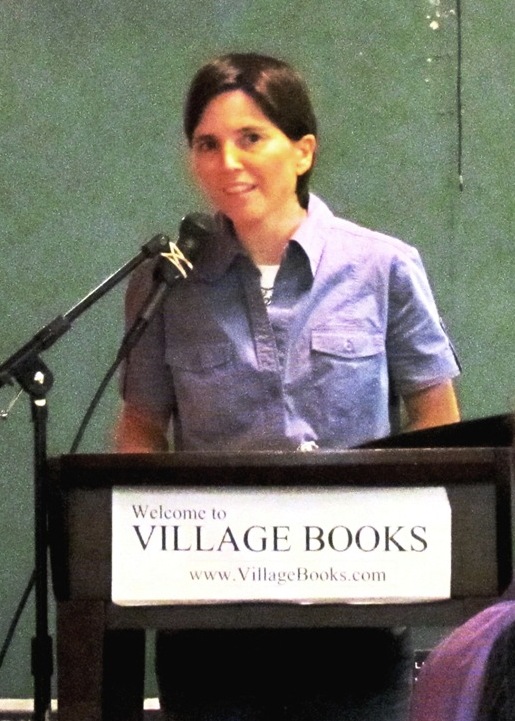
Village Books Reading, 9-17-11

Last weekend (September 17) I had a reading/ book signing event at Village Books in Bellingham, WA, where I went to grad school a few years ago. It was a good turnout, with 30 people showing up on a Saturday afternoon, and my dad even flew in from Michigan to attend. And, of course, to hang out with Alex, his first grandchild. It’s probably a toss-up as to which was the most compelling reason to visit–but I’m flattering myself with that supposition, no doubt.

In any case, below is a video of the first part of the reading, in which I discuss Facebook, lesbians in the locker room, and the division between genre and non-genre fiction. If you’d rather read the written transcript of my talk, I’m copying that in below as well.


Written Transcript

To start off, I thought I’d talk to you today about why I write lesbian romance novels. But to do that, first I thought I’d talk to you about Facebook.

My mom and I were talking recently, and she reported that she and a friend were discussing their mutual bemusement toward Facebook. Specifically, they weren’t sure why anyone would want to be online friends with people they didn’t know.

In my experience, I have two types of Facebook friends—writing community friends, almost none of whom I know in person but who I correspond with regularly about fiction in general and lesbian fiction in particular. Social media channels offer wonderful networking opportunities for writers of niche fiction, because typically we don’t receive as much coverage in mainstream media publications or outlets. My other Facebook friends are people I’ve known throughout my life. In fact, Facebook has been a boon for someone like me who graduated from high school and immediately left my hometown, Kalamazoo, Michigan, vowing never to return. Much of the impetus for this vow came from the fact that I realized at some level that I was gay, and I also believed it wouldn’t be psychologically or physically safe to come out at my high school. Like many other young lesbians, I resisted my attraction to other girls. I told myself that I should be interested in boys, that I should try harder to be a “normal” girl. As a result, I lived something of a double life as a teenager—hiding my sexuality even from myself, for the most part.

The first time I remember acknowledging it to myself was at soccer practice the spring of my senior year of high school. I had just decided to go to Smith College, a women’s college in Massachusetts almost a thousand miles away. It was my first choice all along, but a generous financial aid award had suddenly made it possible. At soccer practice, my coach overheard me telling a friend I would be leaving for Smith in the fall. In front of the entire team, he made a crude comment about not dropping the soap in the locker room, if I caught his drift. It took me a second to realize that he meant I would have to be careful of lesbians. As understanding clicked into place, another thought occurred to me: My coach had it backwards—I would be the lesbian in the locker room that my teammates might worry about. But even as the thought skittered toward my conscious mind, I shut it down. I wasn’t ready to come out yet, not even to myself.

Looking back now, I realize that I picked Smith because I sensed that it might offer a community where I could integrate my sexuality into the rest of my life. Where being gay could be one facet of selfhood among many: middle class, white, Scotch-Irish-Dutch, Michigander, agnostic, lesbian, student, and, of course, soccer player. My freshman year of college, I joined the soccer team. On one of our first away games, I took a shower with a group of upper class women who, it turned out, were all gay. The straight members of the team got dressed without showering, while we gay women laughed and sang and razzed each other under the spray, unconcerned about our bodies or each other, comfortable in our own skin. At Smith, I could be me. I no longer had to hide the gay part from everyone, even myself, just to survive.

Twenty years later, things have changed again. I currently have a dozen or more Facebook friends from Kalamazoo Central High School, only a few of whom are gay and yet all of whom seem interested in hearing about my life as it is now: writer, university admin, wife, soccer fan, non-biological mother to our baby daughter. And yet, I still often feel the kneejerk urge to hide part of my identity: my career as a lesbian romance novelist.

The summer I turned13, my family drove from Michigan to Alaska in a Ford Escort wagon hauling a Coleman pop-up camper. Given the space we had to work with, our reading options were somewhat limited. (What I would have given for a Kindle then!) Anyway, I soon finished off my own books and turned to my older sister’s stash, which included a Harlequin romance. I read that book in what felt like one sitting—and might have been, given that it took us two weeks to drive across Canada. I absolutely devoured it, and thus an addiction was born.

In the years that followed, I fed my Harlequin addiction faithfully until tenth grade, when I lost interest in reading traditional romance novels. I had started to write my own short stories and novels by then, and though I no longer read Harlequins, romance usually played a role in the stories I told. At Smith, I studied history and writing, and actually wrote the short story that served as the basis for Beautiful Game during a fiction-writing class my junior year. Just as I’d resisted being drawn to girls in high school, I tried to resist the pull to write love stories. I told myself I should be writing about other things, “real” things, serious things. The intellectual and academic climate at Smith reinforced the notion that romance novels didn’t count as literature, that genre fiction wasn’t something any self-respecting Smith student or alum should spend her time on. Among our more famous alumnae authors are Sylvia Plath, Gloria Steinem, and Julia Child—women who I get the sense probably didn’t indulge in romance novels. Or, at least, wouldn’t have admitted publicly if they did.

The fact is that in reading and writing circles, genre fiction (mystery, romance, science fiction) tend to be considered lesser than non-genre fiction. This was true at Smith, and it was true here at Western, where I got my Master’s in English a few years ago. Even in the queer writing community, there is still a division between genre fiction and non-genre fiction. A few months ago another Washington State writer, Lambda Literary Award winner Jill Malone, posted some comments on a blog that I, for one, found disappointing. Malone wrote, “In the bookstore where I worked, it was understood that the good writers—like [Jeanette] Winterson and [Sarah] Waters—would be in general fiction, and the other writers would be in genre fiction… They were shelved there because there’s fiction, and then there’s genre.”

Perhaps it wasn’t her intent, but it sounds to me as if Malone is saying that genre fiction isn’t—can’t be—good fiction; that genre fiction is somehow sub-fiction. She is not alone in this view, of course. But despite the entrenched denigration, romance novels are exceedingly popular. Jane Austen, often cited as the mother of romantic fiction, is one of the most widely read writers in English literature. According to the group Romance Writers of America, romance fiction has the largest market share of any genre at 13.5 %, and achieved sales in excess of 1.3 billion dollars—in 2008 alone. Yet romance novels are routinely scoffed at, their authors made to feel less than, as if they should be writing something else. Jill Malone gave voice to this notion when she said in her blog post, “Maybe we [as queer writers] should be concerned less with telling ‘lesbian’ stories and more with telling ‘authentic’ stories about what it means to be alive and seeking.”

In interviews and at other events, I’ve said that I view writing lesbian romance novels as a consciously political act because the love that dare not speak its name takes center stage. These books explore the part of queer life that is most denigrated by the dominant culture: same-sex love and relationships. Romance novels do make up a specific genre with all of the attendant writerly conventions and readerly expectations, the same way a romantic comedy on the big screen follows a particular set of plot points to reach a predictable (happy) ending. But predictability and happy endings do not necessarily rule out authenticity.

As I mentioned earlier, I sometimes hesitate when people ask me what I write. Usually I shoulder on ahead and say, “I write romance novels. Lesbian romance novels.” I come out of the closet, so to speak, and while it isn’t always a comfortable experience for me or for my conversational companion, I almost always feel better about myself afterward for having done so. As a lesbian romance writer, I have to decide weekly, sometimes daily depending on the setting, if I am going to be open about who I am and what I write, or if I’m going to lie. It’s a continual coming out that never ends–just like being gay.

And here’s where Facebook comes back into the story: I recently reconnected with a junior high friend who now lives on the East Coast. Hilary and I were part of a motley crew of geeks who got to escape from our junior high and, later, high school once a week for an English class taught at the local college. Hilary, it turns out, is also gay, and left Kalamazoo for Berkeley and the West Coast first, and then Yale art school and New York City, never, apparently, to look back. When I told her in a Facebook message that I was writing lesbian romances, she responded that she should have known—apparently when we were thirteen I announced that I wanted to write Harlequins. She also told me she’s now dating a Smith alum herself, and wishes I had clued her in sooner to the greatness of women’s colleges.

In a way, Hilary’s art is based on genre fiction. She told me that many of her paintings, which are represented by a New York gallery and (according to Google) have been well received by art critics, were inspired by vintage lesbian pulp fiction cover illustrations. I love that. Twenty years later, we’ve both integrated who we are into what we do, her as a painter, me as a writer. And I have to say, this is the happiest I’ve ever been. As one Facebook friend from grad school wrote on my wall recently, “Wow, dreams realized. Congrats!”

I know I’m lucky, because they really have been.

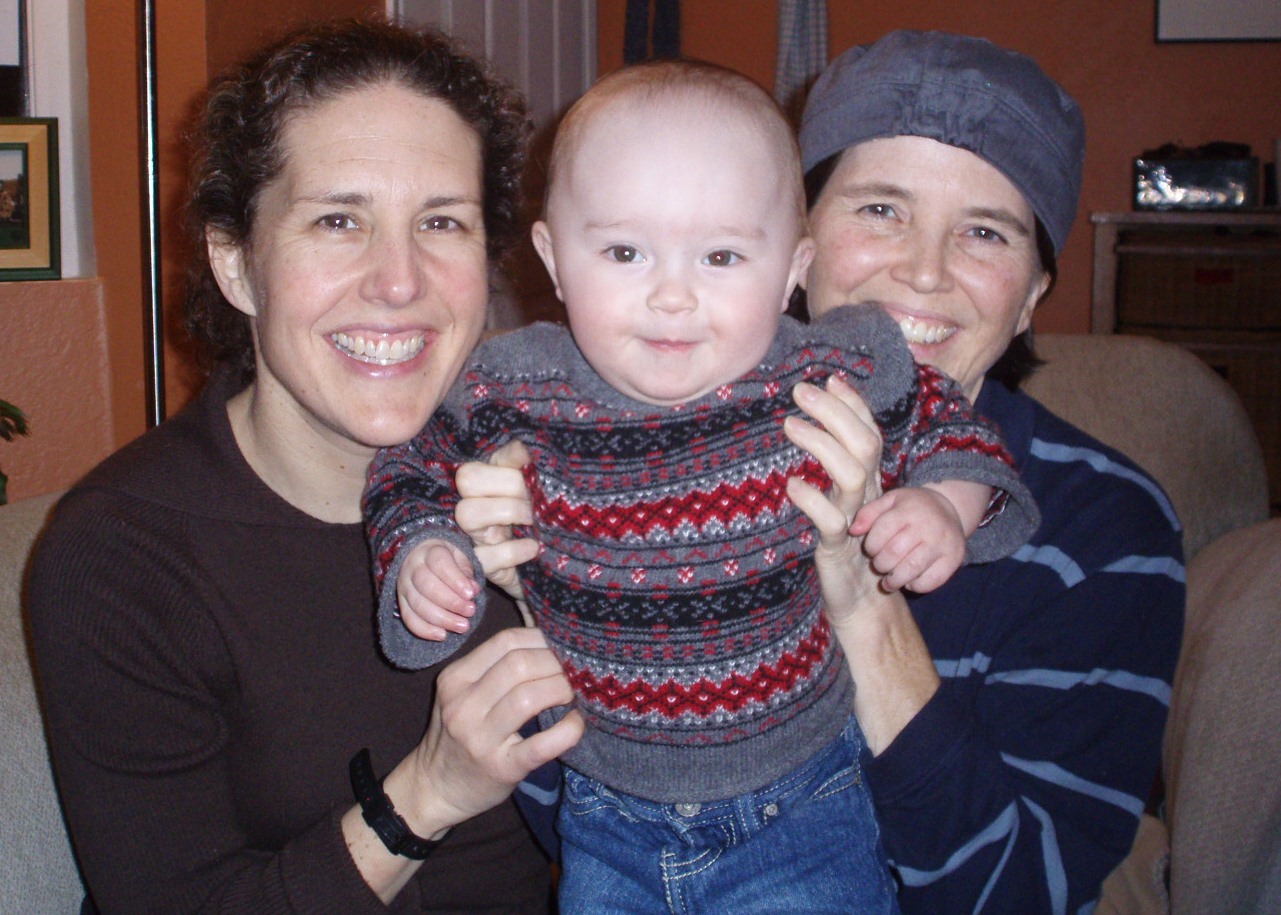
Me, my dad, Alex and Kris celebrating at Village Books

Posted in Uncategorized | Leave a comment